
Last month, Tremont hosted a small but meaningful program – Living with Birds – on our second campus as part of the Museum of Infinite Outcome’s Avifauna celebration. 18 people joined us for this outing – many of them new to birding, and nearly all visiting our second campus for the very first time.
This wasn’t just a bird walk – it was a quiet test of a bold idea: that ecological design and experiential learning can be planned side by side, each one strengthening the other from the very beginning. We were testing what happens when we blend the wonder-filled, curiosity-first approach of Tremont’s programming with a campus designed from the ground up to support the surrounding ecosystem.
Logan, our youth programs director and resident bird expert, led us in exploring the most joyful and accessible ways to connect with birds – through listening, looking, and noticing. Participants learned how to tune into the direction of bird calls, how to describe sounds they heard, and how to begin recognizing patterns in movement and behavior. It wasn’t about identifying every species by sight, but instead was about being present and noticing something new. We got curious together, in real time, in a place that invites that kind of shared learning.
We also talked about nests, birdhouses, and what it means to make a space that is welcoming for birds. And that’s where the bigger conversation started – because on our second campus, we’re not just planning buildings. We’re planning a way of being in relationship with the land.
I shared how the campus design has been intentionally planned to support – not disrupt – the native ecology. This means keeping our built footprint small, preserving large swaths of the land under conservation easement, and integrating features like bird-safe windows and biophilic design principles that mimic natural patterns and rhythms. I also shared how we collected and are using data, like the indexing of trees, sensitive plant populations, and habitat types, to inform where and how we build.
We talked about the power of permeable boundaries – how native plantings and hedgerows can guide people while still allowing wildlife to pass freely. We discussed how periodic, prescribed fire can actually benefit bird populations by restoring native grasslands. And we explored how every design choice can become part of a larger story about healing and regeneration, and that many of the features we’re including in our second campus plan can be replicated at home.
What made this event feel especially exciting wasn’t just the birds (though we saw and heard plenty). It was the alignment between how we teach and where we’re able to teach. Our second campus opens the door for this kind of program – one where environmentally-friendly design becomes part of the curriculum, and where people don’t just learn about nature, but learn with it. We’re modeling what it means to live in relationship with the land and truly care for the environment around us.
Living with Birds was a small gathering, but it was also a proof-of-concept. It was a moment when our vision came into focus – where ecological design and curiosity-driven learning overlapped perfectly. It reminded us that our second campus isn’t just a new location – it’s a living laboratory for a new kind of learning where curiosity and conservation walk hand in hand.
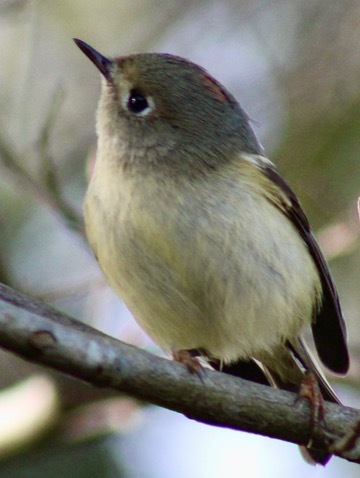
Pictured above: Participants at the Living With Birds event; photo by Erin Rosolina. Pictured right: a sampling of birds spotted on the second campus as part of our biodiversity indexing project; photos by Randy Puckett.


About the Author

Erin Rosolina is the Great Smoky Mountains Institute at Tremont’s Marketing Director. She grew up in the mountains of western North Carolina where trillium, bloodroot and galax were everyday friends. Erin earned a degree in sustainable community development from Berea College in Kentucky, and then went on to receive the Compton Mentor Fellowship. Erin has worked in marketing with regional and national nonprofit organizations for over a decade and has been at Tremont since 2021.