

This article was originally published as part of Tremont’s 2024 Community Science Report, written by Tyler Thomas, manager of science literacy and research. View the full report with additional functionality here.
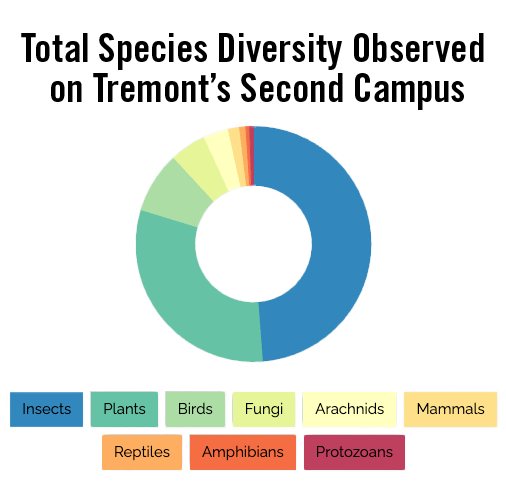
The overall goal of this research project was to create a baseline snapshot of the species found on Tremont’s second campus through iNaturalist observations. iNaturalist requires digital photographs of a species or evidence they have physically been at the location (tracks, scat, bird sound recordings, etc.). The iNaturalist app is free to download and an awesome way to contribute to community science in the park or your own backyard!
These data were collected during 33 surveys by Randy Puckett from June 24 to November 27, 2024, and resulted in 5677 total observations of 409 different species!

Specifically, this project focused on the managed meadows of the property with a particular interest in recording the species of native pollinators present as well as the flowers they were observed on. The most commonly observed pollinator was the native Common Eastern Bumble Bee (Bombus impatiens) with 423 iNaturalist research-grade observations from July 3 to October 22, 2024.

Many of these Common Eastern Bumble Bees appeared to prefer to feed and pollinate Red Clovers with 151 observations on this non-native legume species. The most common native flowering plants they were observed on were Goldenrods (70 observations), White-flowered Frostweed (54 observations), and Yellow Wingstem (44 observations).
Keep an eye on our iNaturalist project for more from our second campus biodiversity project!
Many thanks to Randy Puckett for his endless passion for field ecology and for sharing his love of science with others!
Cover image by Laura Russo.